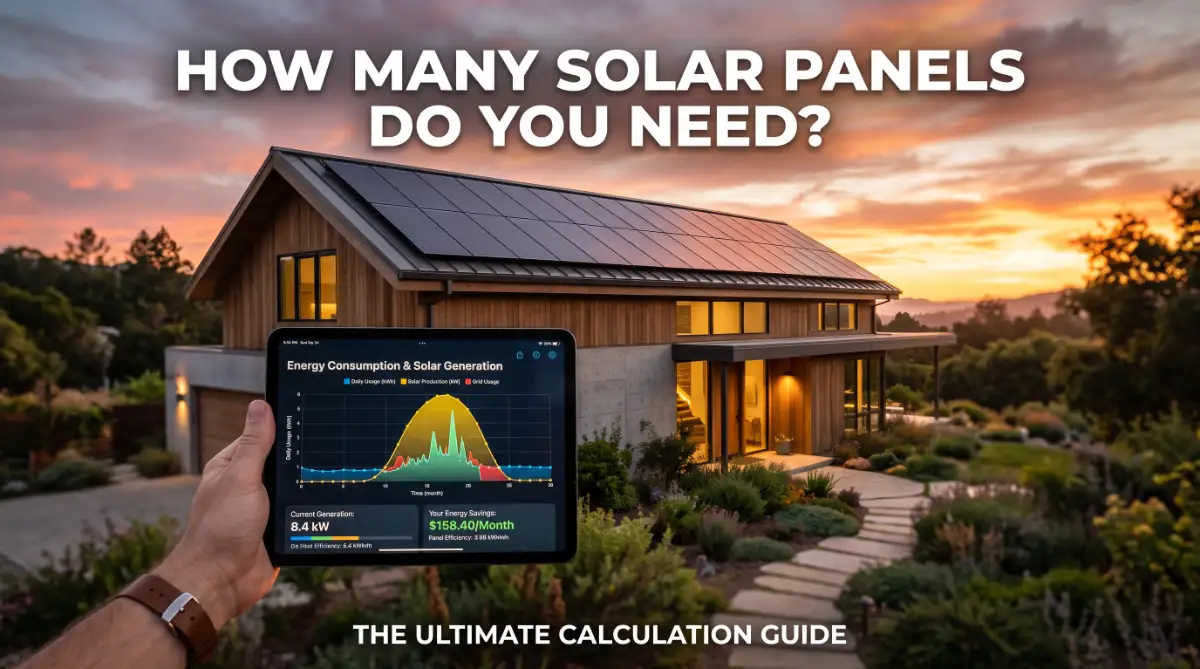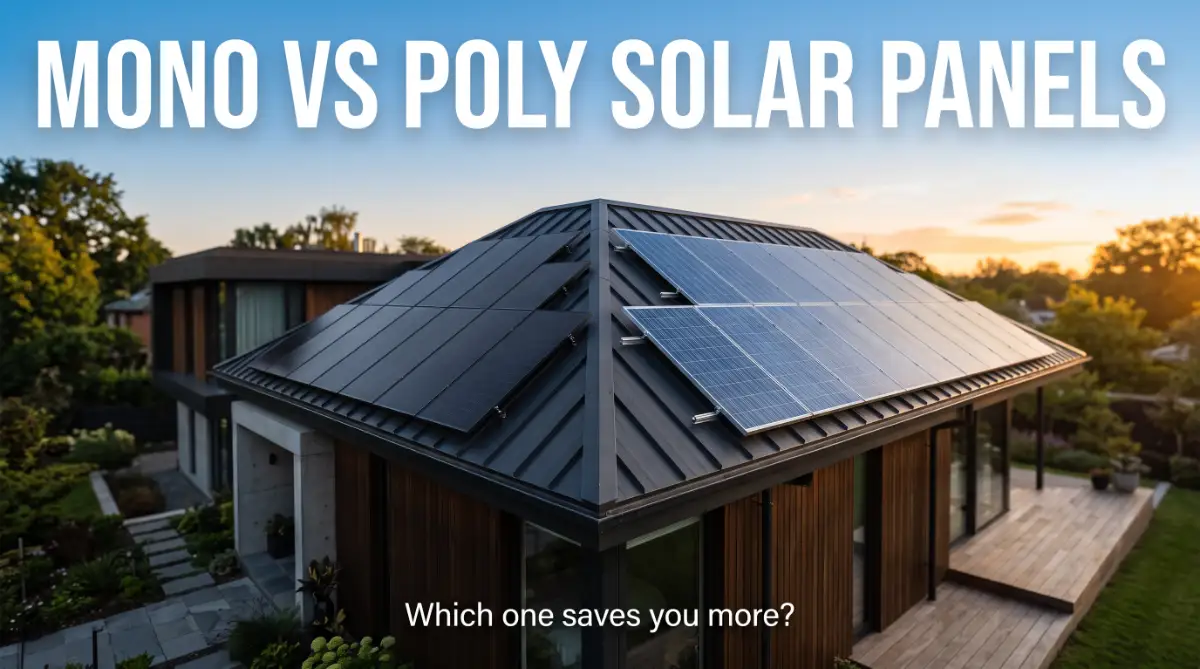
Thinking about solar energy is exciting, but looking at a sea of blue and black panels is exhausting. You want to save money on your electric bills, but the technical names make your head spin.
Most guides use complex words that leave you feeling more confused than when you started. If you pick the wrong type for your roof, you could waste thousands of dollars on a system that doesn't even power your home properly.
Common advice often ignores your specific needs, leaving you stuck with high costs and low energy.
We created this simple guide to clear the fog and help you make the right choice today. We will show you the exact differences between these panels so you can finally relax and watch your power bills drop.
Let’s find the perfect solar fit for your home together.
The Silent Struggle of Choosing the Right Solar Power for Your Home
Watching your electricity bills climb every month is a painful experience. You look at your roof and know it could be working for you.
However, the moment you start searching for solar panels, you hit a wall of confusion. You see black panels and blue panels.
You hear terms like "monocrystalline" and "polycrystalline." It feels like you need a degree in science just to save a few dollars.
This confusion often leads to deep frustration. You want to make a smart choice, but you are afraid of making an expensive mistake.
The weight of this decision keeps many people stuck with their old, expensive energy providers. It is a cycle of wanting change but feeling blocked by technical noise.
Why Most Homeowners Feel Lost in the Solar World
The path to solar energy should be simple, but it rarely is. Here are the reasons why many of us struggle to pull the trigger:
- Information Overload: You search for a simple answer and find thousands of articles full of complex math.
- Sales Pressure: Salespeople often push the most expensive option, even if it doesn't fit your specific home needs.
- The Price Gap: You see a huge difference in price between two panels that look almost identical.
- Lack of Clear Proof: It is hard to find honest advice that isn't just trying to sell you a specific brand.
- Fear of Performance Loss: You worry that if you choose the cheaper blue panels, they won't work when it's cloudy.
How Uncertainty Damages Your Confidence and Your Wallet
When you don't have the right information, your peace of mind disappears. You start to doubt every quote you receive.
- Financial Anxiety: You feel like you are gambling with your savings rather than making a safe investment.
- Environmental Guilt: You want to help the planet, but the stress of the choice makes you want to quit entirely.
- Feeling Powerless: You remain stuck with big utility companies because the alternative feels too risky.
- Decision Fatigue: After weeks of reading, you end up doing nothing, which costs you more money in the long run.
We understand this struggle. You don't need more jargon; you need a clear map to make a choice that fits your life and your budget.
Your 5-Step Roadmap to Picking the Perfect Solar Setup
I want to help you cut through the noise. Choosing between monocrystalline (mono) and polycrystalline (poly) panels doesn't have to be hard.
Think of solar panels like cars. Some are built for speed and small spaces, while others are built for heavy lifting and lower costs.
Both will get you where you need to go. You just need to pick the one that fits your driveway and your wallet.
Step 1: Analyze Your Available Roof Real Estate
The very first thing we need to do is look up. Your roof size is the biggest factor in this decision.
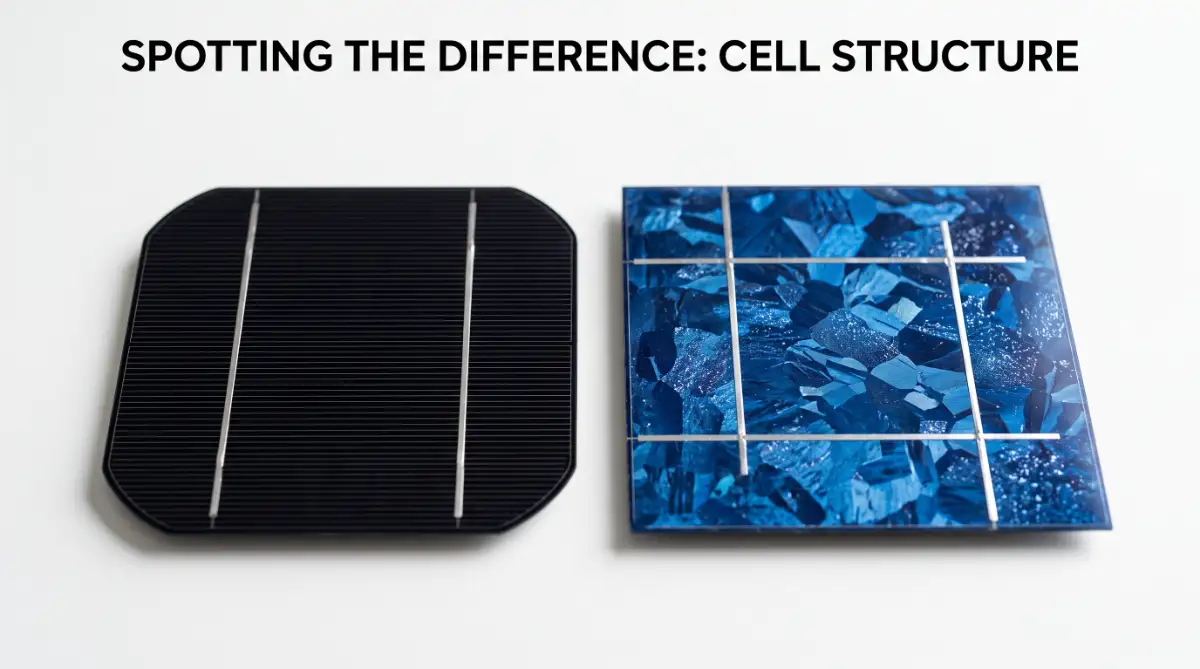
Monocrystalline panels are the high-performers of the solar world. They are made from a single, pure silicon crystal.
Because they are so pure, they are very efficient. This means they produce a lot of power in a very small amount of space.
If you have a small roof, these black panels are your best friend. You can get the power you need without needing a massive surface area.
Polycrystalline panels are made from many silicon crystals melted together. This makes them slightly less efficient.
Because they are less efficient, you need more of them to produce the same amount of power. If you have a huge roof or a large field, this is perfectly fine.
Ask yourself: "Is my roof space limited?" If the answer is yes, you should look closely at monocrystalline options.
Step 2: Understand Your Local Climate Realities
Solar panels are sensitive to heat and light. It sounds strange, but solar panels actually don't like getting too hot.
When a panel gets very hot, its ability to produce electricity goes down. This is why your local weather matters.
Monocrystalline panels generally handle high temperatures better. They have a better "temperature coefficient," which is a fancy way of saying they stay strong in the heat.
If you live in a place where summers are boiling, these panels will give you more consistent power. You won't see a big drop in performance at noon.
Polycrystalline panels tend to lose a bit more efficiency when it gets very hot. In cooler climates, this difference is almost invisible.
I always tell my readers to check their average summer temperatures. If you live in a cooler area, the cheaper blue panels might work just as well for you.
Step 3: Compare the Long-Term Return on Investment (ROI)
We need to talk about the money. Not just the price today, but the money you will save over twenty years.
The Price of Polycrystalline:
These panels are cheaper to buy. The process of melting many crystals together is simple and fast.
If you want to spend the least amount of money today, poly is the winner. It lowers the "entry fee" for going solar.
The Value of Monocrystalline:
These panels cost more upfront because growing a single crystal is a slow process. However, they often pay for themselves faster.
Because they produce more energy every day, your monthly savings will be higher. Over twenty years, a mono system might actually save you more total cash.
It is like buying a high-quality appliance. You pay more at the store, but it uses less power and lasts longer.
Step 4: Evaluate the Aesthetic and Home Value
You care about how your home looks, and so do your neighbors. The look of your solar system can actually affect your property value.
The Sleek Black Look:
Monocrystalline panels are dark black. They look modern, clean, and premium.
On a dark roof, they blend in beautifully. Most homeowners find them much more attractive.
The Traditional Blue Look:
Polycrystalline panels have a blue, marbled appearance. They stand out more and look like older technology.
Some people don't mind this, but others find it a bit distracting. If you plan to sell your home in the future, the sleek look of black panels might be a selling point.
I have seen many buyers choose a home because the solar system looked like it was part of the design, not an afterthought.
Step 5: Check for Modern Features Like PERC Technology
Technology is always moving forward. When you look at panels today, you might see a label called PERC.
PERC stands for Passivated Emitter and Rear Cell. It sounds complicated, but it is actually a very simple and cool idea.
A PERC layer is like a mirror on the back of the solar cell. When light passes through the cell without being caught, the mirror reflects it back.
This gives the silicon a second chance to turn that light into energy. It is a huge boost for efficiency.
While PERC can be found on both types, it is most common on monocrystalline panels. This technology helps the panels work better even on cloudy days.
If your area gets a lot of overcast weather, looking for Mono-PERC panels is a very smart move. It ensures you are getting the most out of every ray of light.
Myth vs. Reality: The Solar Truth
Let's clear up some common lies you might hear in the solar industry.
Myth: Blue panels (Poly) are low quality and break easily.
Reality: Both types are incredibly durable. They are both built to last 25 to 30 years and can survive heavy storms and hail.
Myth: Black panels (Mono) don't work in the shade.
Reality: No solar panel likes shade. However, high-efficiency mono panels often perform slightly better in low-light conditions than older poly panels.
Myth: You should always buy the most expensive panel.
Reality: Not true. If you have a massive roof and a tight budget, the "cheaper" poly panels might actually be the smartest financial choice for you.
Expert Insight: The Warranty Factor
When you buy a solar system, you are starting a long-term relationship. You want to know that the company stands behind their product.
Most top-tier manufacturers offer a 25-year performance warranty. This applies to both mono and poly panels.
This warranty usually guarantees that the panels will still produce at least 80% of their original power after 25 years. This is amazing!
When you are comparing quotes, don't just look at the type of panel. Look at the brand and the warranty they provide.
A "cheap" mono panel from a company that might disappear in two years is a bad investment. A poly panel from a trusted, global brand is a much safer bet.
Practical Scenario: Which One Should You Choose?
Let's look at two different families to see how this works in real life.
The Smith Family:
They live in a small city home with a tiny roof. They have a high electricity bill because they work from home.
For the Smiths, monocrystalline is the only way to go. They need maximum power from their small roof to make the investment worth it.
The Garcia Family:
They live on a large property with a big barn. They have all the space in the world and want to stay within a strict budget.
For the Garcias, polycrystalline is a fantastic choice. They can install a larger number of blue panels and get all the power they need for a lower price.
Thoughts on Your Solar Journey
You are now ahead of 90% of other homeowners. You know the difference between the black and blue panels.
You know that space, heat, and budget are the real drivers of your decision. You don't have to be afraid of the technical names anymore.
Taking the step toward solar energy is a brave and smart move. It shows you care about your family's future and the health of our planet.
Whether you choose the sleek black mono panels or the reliable blue poly panels, you are making a great choice. You are taking control of your energy.
Start by looking at your roof today. Measure your space and think about your budget. The sun is waiting to power your home!
Mastering Your Solar Investment: Expert Secrets for Long-Term Success
Now that we have covered the basics of mono and poly panels, let’s go deeper. Choosing the right panel is just the first step.
To really save money, you need to know how to make those panels work at their best. Think of it like buying a high-end car; you still need to know how to drive it well to save on fuel.
Maximizing Energy Harvest Through Smart Positioning
The way your panels sit on your roof changes how much money you save. Many people think they can just slap panels anywhere and get results.
In the Northern Hemisphere, south-facing roofs are usually the gold standard. They catch the most sun throughout the day.
However, if you work from home, you might want to consider an East-West split. This setup gives you a steady flow of power in the morning and late afternoon.
This strategy helps you avoid using expensive grid power during your peak work hours. It is a smart way to lower monthly utility bills through sustainable home energy habits without changing your lifestyle.
The Silent Energy Thief: Why Cleaning Matters More Than You Think
Dust, pollen, and bird droppings are not just ugly. They act like a thin blanket over your solar cells.
Since monocrystalline panels are more efficient, even a small amount of dirt can feel like a big loss. You are paying for high performance, so you should keep the "engine" clean.
We recommend a gentle cleaning every few months, especially if you live in a dry or dusty area. Just a simple spray with a garden hose can sometimes increase your output by 5% to 10%.
If you have an electric car, this extra energy is like getting free fuel for your commute. Learning how to properly maintain electric vehicle batteries for maximum longevity goes hand-in-hand with keeping your solar production high.
Monitoring Your System Like a Pro
Modern solar systems come with apps that show you exactly how much power you are making. Don't ignore these apps.
By checking your production daily, you can spot problems early. If one panel is producing less than the others, it might be shaded by a new tree branch or a neighbor’s chimney.
Early detection saves you from losing weeks of free energy. It keeps your system running at peak performance for its entire 25-year lifespan.
Expert Secret: The Power of Micro-Inverters
Traditional systems use one big box (a string inverter) to handle all the panels. This can be a problem.
If one panel gets shaded, the whole system slows down. It is like a garden hose with a kink in it.
Micro-inverters are small devices placed under each individual panel. They allow each panel to work independently.
If you have a roof with tricky shadows, micro-inverters paired with monocrystalline panels are a winning combination.
They ensure that a single shadow doesn't kill your entire energy production for the day.
Calculating Your True Energy Needs
Before you sign any contract, you must know your numbers. Don't let a salesperson guess for you.
You need to look at your past twelve months of electricity bills. This shows you exactly how much power you use during different seasons.
Learning how to calculate the actual solar panel requirements for your home energy consumption is the best way to avoid buying too many or too few panels. It keeps your budget on track and ensures your ROI is as fast as possible.

Fatal Errors That Could Ruin Your Solar Savings
Even with the best intentions, it is easy to fall into traps. These mistakes can cost you thousands of dollars over time.
I have seen many homeowners regret their choices because they missed one small detail. Let's make sure that doesn't happen to you.
Choosing Price Over Specifications
The biggest mistake is picking the cheapest quote without looking at the details. A cheap panel might have a terrible warranty.
If a panel fails in seven years and the company is gone, your "savings" vanish. You have to pay for a full replacement yourself.
Always look for a balance between cost and quality. It is a part of knowing how to stop the money leak: easy ways to slash your household spending by investing in things that actually last.
Ignoring the "Soft Shading" Effect
Most people look for big shadows from trees. But "soft shading" from a power line or a distant pole can be just as bad.
Soft shadows spread out over the panel and confuse the cells. This can lead to hot spots that damage the panel over time.
Make sure your installer does a full "shading analysis." They use special tools to see where shadows will fall during every hour of the year.
Skipping the Roof Inspection
Your solar panels will last 25 years. Will your roof last that long?
If you install panels on an old roof, you will have to pay a lot of money to take them off and put them back on when the roof needs a repair. This can cost $2,000 or more just for labor.
Always have a roof expert check your shingles before the solar team arrives. If your roof only has five years left, fix the roof first.
Falling for "Free Solar" Scams
You might see ads promising "Free Solar from the Government." Be very careful with these.
While there are great tax credits and incentives, solar is rarely completely free. These ads are often just a way to get your phone number for high-pressure sales calls.
According to the U.S. Department of Energy, legitimate incentives usually come in the form of tax credits, not a free system. Always double-check any "too good to be true" offers with official government websites.
Forgetting About Future Energy Growth
Are you planning to buy an electric car next year? Do you want to add a heat pump or a swimming pool?
Many people design their solar system for their current needs. But your energy needs will likely grow.
If you fill your entire roof with less efficient poly cry stalline panels now, you won't have room to add more later. This is why many experts suggest mono cry stalline; it leaves you "room to grow" on your roof.
Your Action Plan for a Brighter, Cheaper Future
You are now equipped with the knowledge of a solar expert. You know the difference between mono and poly, and you know how to avoid the biggest traps.
The most important step is to take action. Every day you wait is another day you are giving away money to the power company.
Start Small but Think Big
You don't have to go 100% off-grid on day one. You can start with a system that covers 70% of your needs and build up.
The goal is to get started. Solar is one of the few home improvements that actually pays you back every single month.
Your 30-Day Solar Checklist
- Gather your bills: Look at your energy use for the last year.
- Check your roof: Make sure it is in good shape and has plenty of sun.
- Get three quotes: Never settle for just one estimate.
- Compare the tech: Ask about Mono vs Poly and if they use PERC technology.
- Review the warranty: Ensure the company has been around a long time.
A Final Word of Encouragement
Switching to solar is a powerful feeling. It turns your home into a tiny power plant.
It gives you a sense of security and pride. You are taking a big step toward a cleaner world and a fatter savings account.
Don't let the fear of "doing it perfectly" stop you from doing it at all. Use the tips we discussed, trust your research, and move forward with confidence.
You have the map. Now it’s time to start the journey. Your future self will thank you for the lower bills and the smarter home you are building today.
Disclaimer: The information provided in this blog post is for educational purposes only. Solar regulations, incentives, and technical requirements vary greatly by location. Always consult with a certified solar installer and a professional tax advisor before making a final investment decision. Home solar results depend on individual roof orientation, local weather patterns, and specific energy usage habits.