
The Heavy Burden of a Low Credit Score
A few years ago, I felt totally stuck when a landlord rejected my rental application just because of my credit score. It was embarrassing to realize that a single number could control where I lived and how much I had to pay for everything.
I spent months feeling like I was failing at life, but that rock-bottom moment was what finally pushed me to learn how the system actually works.
We have all been there. You apply for a new apartment or a car loan, and the answer is "no." That single word feels like a punch in the gut.
It is not just about a number on a screen. A low credit score is a wall between you and the life you want to live. It keeps you stuck in high-interest traps and limits your choices.
You might feel like you are walking through mud every time you try to move forward financially. It is frustrating because you work hard, yet the system seems to work against you.
This feeling of being trapped is real, and it is something millions of people face every single day. You are not alone in this struggle, but you do need a way out.
Why Finding the Right Credit Advice is So Hard
Most people try to fix their credit but fail within the first few months. They often get lost in a sea of bad advice and confusing terms.
- Many people follow "hacks" they see online that actually hurt their scores in the long run.
- The internet is full of "credit repair" companies that charge huge fees but do very little work.
- Lenders often provide vague reasons for rejection, leaving you guessing about what went wrong.
- Standard banking advice is usually too slow for someone who needs results in a few months.
- People often focus on the wrong things, like closing old accounts, which can actually lower their score.
It is easy to get overwhelmed when every website tells you something different. This confusion leads to many people giving up entirely, which only makes the problem worse over time.
How Financial Stress Breaks Your Confidence
Living with a poor credit score is not just a money problem; it is a mental health challenge. The constant fear of being rejected stays in the back of your mind.
- You might feel embarrassed to talk about your finances with friends or family members.
- The anxiety of an upcoming credit check can keep you awake at night.
- Losing your sense of financial control can lead to a lack of confidence in other areas of life.
- You start to feel like a "bad" person because of a mathematical score that doesn't reflect your character.
- This cycle of stress makes it harder to make smart, calm decisions about your spending and saving.
I want you to know that your credit score is not a reflection of who you are. It is simply a snapshot of your history that can be changed with the right steps.
A Deep Look into the World of Credit Scores
Understanding how credit works is like learning a new language. Once you know the rules, you can start to win the game.
Most people think of their credit score as a grade, but it is actually a risk assessment. Banks use it to guess if you will pay them back on time.
If your score is low, they see you as a high risk. This means they will either say no or charge you much more money in interest.
Over time, these high interest rates steal thousands of dollars from your pocket. That is money you could have used for your family, your home, or your future.
Improving your score is the fastest way to give yourself a massive raise. When you lower your interest rates, you keep more of your own hard-earned money every single month.
The system is automated, which is actually good news for you. Since it relies on data, changing that data will change your score automatically.
Your Practical Roadmap to a Better Score
You do not need to be a math genius to fix your credit. You just need a clear plan and the discipline to follow it for a few months.
We are going to look at the most effective ways to see movement in your numbers quickly. These steps focus on the areas that have the biggest impact on the scoring models.
Step 1: Hunting for Hidden Mistakes
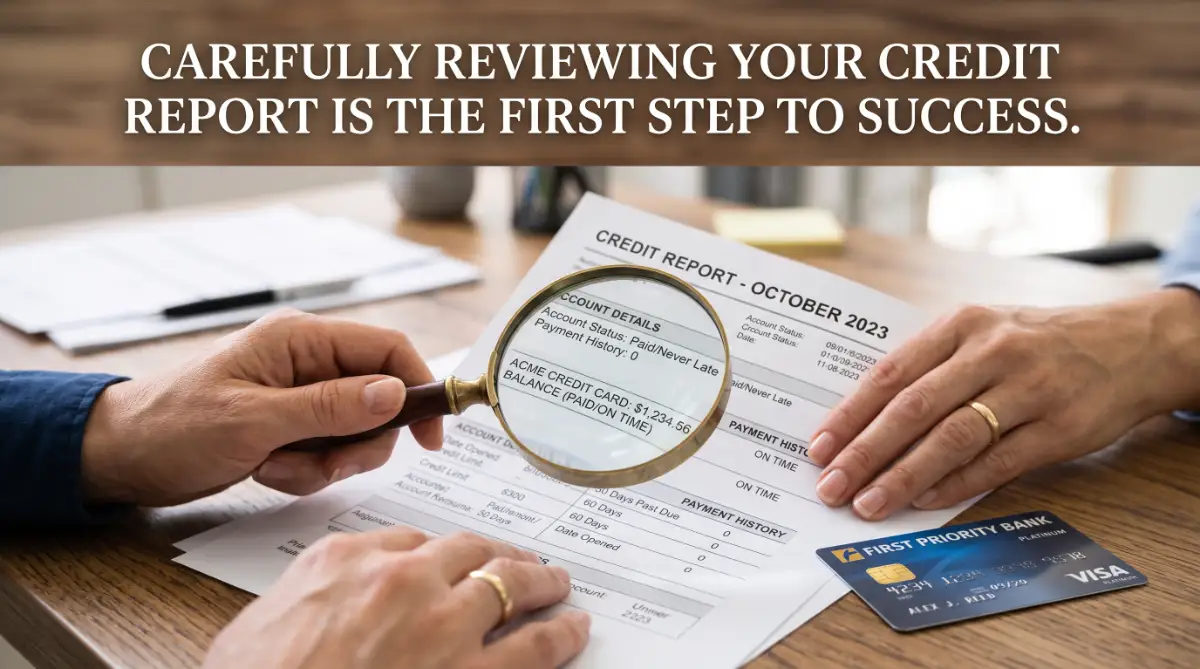
The first thing you must do is get your hands on your actual credit reports. You are allowed to see these for free, so do not pay anyone for them.
Look through every line of those reports like a detective. You would be surprised how often banks and collection agencies make simple mistakes that hurt you.
Check for accounts that do not belong to you or late payments that you actually paid on time. Even a small mistake in your name or address can cause issues.
If you find an error, you must tell the credit bureau in writing. They are legally required to investigate and fix it if they cannot prove the data is correct.
One thing I learned the hard way is that ignoring a small bill can be a huge mistake. I once let a tiny $40 medical bill go to collections simply because I didn't think it mattered, and it tanked my score by nearly 50 points overnight.
Now, I open every piece of mail immediately because I know even a small error can erase a year of hard work.
Removing just one negative mistake can sometimes jump your score by thirty or forty points in a single month. This is the fastest way to see a change.
Step 2: The Power of Your Credit Balance
Your "credit utilization" is the second most important part of your score. This is just a fancy way of saying how much of your limit you are using.
If you have a card with a $1,000 limit and you owe $900, your score will drop. The banks think you are struggling and desperate for cash.
The goal is to keep your balance below 30% of your limit. If you can get it below 10%, your score will climb even higher and faster.
You can do this by paying down the balance, but there is another trick. You can ask your bank to increase your credit limit without spending more.
If your limit goes from $1,000 to $2,000 and you still owe $900, your utilization drops instantly. This makes you look much safer to the scoring system.
Want to see exactly how your credit card balance affects your score? Check out this quick video that breaks down the math so you can start seeing a jump in your numbers right away!
Step 3: Borrowing Someone Else's Good Habits
If you have a friend or family member with perfect credit, they can help you without giving you any money. This is called becoming an "authorized user."
They add your name to one of their oldest, cleanest credit card accounts. You do not even need to have the physical card or the password.
The entire history of that account then shows up on your credit report. If that account is ten years old and has never had a late payment, it makes your report look great.
This is a powerful way to add "age" to your credit history instantly. It is especially helpful for younger people or those who are starting over after a rough patch.
Just make sure the person you ask actually has good habits. If they miss a payment on that card, it will hurt your score too, so choose wisely.
Why Logic Wins Over Emotion in Finance
Most people make credit mistakes because they react with emotion. They get scared of a bill and ignore it, or they get excited and spend too much.
To fix your score, you have to treat it like a business. It is a series of data points that need to be managed with a cold, logical eye.
Think of your credit report as a resume for your money. You want it to look professional, organized, and reliable to anyone who reads it.
Every time you make a payment on time, you are adding a positive data point. These positive points eventually drown out the old, negative ones.
Time is your best friend in this process. As negative items get older, they lose their power to pull your score down.
Building a Strong Foundation for the Future
Fixing your credit is not just about getting a new loan today. It is about building a foundation so you never have to worry about money the same way again.
When you have a high score, the world opens up. You get the best insurance rates, the best cell phone plans, and the best mortgage terms.
You become the person the banks want to work with. They will start competing for your business instead of you begging for theirs.
That shift in power is what we are aiming for. It changes how you feel when you walk into a bank or talk to a realtor.
You deserve to have that level of peace and confidence in your life. It starts with these small, intentional steps that we are taking right now.
Keep your focus on the long-term goal. The short-term work of checking reports and paying down balances is worth the freedom that comes later.
By following this guide, you are taking control of your financial destiny. You are no longer a victim of a number; you are the manager of your own success.
Stay patient and keep moving forward. The results will come as long as you stay consistent with these core habits.
Master the Art of Credit Timing for Maximum Impact
Now that you have the basics down, it is time to look at the "pro" secrets that most people never learn. One of the most effective ways to see a fast jump in your score is to understand reporting dates.
Most people think that paying their bill by the "Due Date" is enough. While that keeps you from being late, it does not always help your credit score look its best.
Banks report your balance to the credit bureaus on a specific day called the Statement Closing Date. If you spend a lot of money right before that date, the bank reports a high balance even if you pay it off a few days later.
To fix this, find out when your statement closes each month. Try to pay your balance down to almost zero three days before that closing date.
This simple trick makes the credit bureaus think you are barely using your credit. It shows a very low utilization rate, which can send your score up almost instantly.
Understanding what is a credit score and how it impacts your financial future helps you see why these small timing shifts matter so much. It is all about how you look on paper to the automated systems.
Diversify Your Credit Portfolio Like a Professional
The scoring systems love to see that you can handle different types of debt at the same time. This is often called your credit mix.
If you only have credit cards, your score might stay stuck at a certain level. Adding a small installment loan, like a car loan or a small personal loan, can help.
However, do not go out and take a big loan just for the sake of your score. Some people use "credit builder loans" which are designed specifically to help you show a history of on-time payments.
When you have both "revolving" credit (like cards) and "installment" credit (like loans), you look like a more balanced borrower. This shows the banks that you can manage various financial responsibilities.
Be careful not to overdo it, though. You should always check your monthly budget to make sure you can afford any new monthly payments.
The Secret Value of Your Oldest Accounts
One of the biggest mistakes people make is closing credit cards they no longer use. They think they are being responsible by "cleaning up" their finances.
In reality, the age of your credit history is a huge factor in your score. The longer an account has been open, the better it is for you.
When you close an old card, you shorten your average credit age. This makes you look less experienced to lenders.
If the card has no annual fee, just keep it open and put a very small charge on it once every few months. This keeps the account active and helps your score stay high.
If you are worried about spending, hide the card in a drawer or a safe place. Just do not close it, as that history is like gold for your credit profile.
According to financial experts at Investopedia, the length of credit history makes up about 15% of your total score. That is too big of a chunk to just throw away by closing an old account.
How to Maintain Your High Score for Years to Come
Getting a high score is one thing, but keeping it requires a shift in your daily habits. You need to treat your credit like a living garden that needs regular care.
- Set up automatic payments for at least the minimum amount on every single bill you have.
- Check your credit report at least once every three months to catch any new errors early.
- Avoid applying for several new cards or loans in a short window of time.
- Keep a small emergency fund so you never have to rely on high-interest credit cards when something goes wrong.
When you have a safety net, you are less likely to make desperate financial choices. This keeps your credit profile clean and stable over the long term.
Managing your credit is much easier when you also focus on slashing your household spending. The less you need to borrow, the more power you have over your own money.

Avoiding the Traps That Pull Your Score Down
Even when you are doing everything right, one small mistake can erase months of hard work. You must be aware of the common traps that catch even the smartest people.
One major pitfall is applying for too much credit at once. Every time you apply for a card, the lender does a "hard inquiry" on your report.
A single inquiry might only drop your score by a few points. But five or six inquiries in a month tell the banks that you are in financial trouble.
They see this as a red flag and will often deny your applications. If you need a loan, do your research first and only apply for the one you are most likely to get.
Another dangerous mistake is co-signing for a friend or relative. When you co-sign, you are 100% responsible for that debt.
If they miss a payment, it hits your credit report just as hard as theirs. It can destroy your score and your relationship at the same time.
It is always better to help people in other ways rather than putting your financial future at risk. You can read more about why you should avoid these personal loan mistakes to keep your credit safe.
The Myth of "Checking Your Own Score"
Many people are afraid to look at their own credit because they think it will lower their score. This is a complete myth that keeps people in the dark.
When you check your own score through a bank app or a website, it is called a "soft inquiry." These have zero impact on your credit score.
In fact, you should check your score often. It helps you understand how your spending and payments affect your numbers in real-time.
Being afraid of the number won't change it. Facing the data is the first step toward making it better.
Don't Ignore the "Small" Collection Notices
Sometimes, people let small bills like medical fees or library fines go unpaid. They think $50 or $100 won't matter much.
However, a collection account for $50 can hurt your score just as much as one for $5,000. The scoring system sees "Collection" as a sign of failure to pay.
If you get a notice about a small debt, try to resolve it immediately. You can often negotiate with the agency to have the entry removed if you pay in full.
This is called a "Pay for Delete" agreement. It is not always guaranteed, but it is always worth asking for before you send any money.
Always get any agreement in writing or through email. This protects you in case the agency doesn't follow through on their promise to update your report.
Your Daily Checklist for Credit Success
To make this feel less like a chore, turn it into a simple routine. You don't need to spend hours on this every week.
- Check your banking app every morning to see if any unexpected charges appeared.
- Log into your credit tracking tool once a week to see if your score has moved.
- Review your budget once a month to see if you can put a little extra toward your balances.
- Verify your mailing address with all your lenders so you never miss a paper statement or notice.
These tiny habits build up over time. They create a "financial shield" that protects you from surprises.
Lenders like the Consumer Financial Protection Bureau emphasize that staying informed is your best defense against predatory lending. When you know your score, you know your value.
Taking Charge of Your Financial Future Today
Improving your credit is a journey, not a race. You might see some small dips along the way, but the general trend should always be upward.
Think about how you will feel a year from now when you walk into a dealership or a bank. You won't be nervous or worried about what they might say.
You will have the confidence of someone who has mastered their finances. That peace of mind is worth every bit of effort you are putting in today.
The most important step is simply to start. Don't wait for the "perfect" time to fix your credit.
The best time to start was years ago, but the second-best time is right now. Every on-time payment and every corrected error is a brick in your wall of financial security.
You have the tools, the knowledge, and the plan. Now, it is time to take action and build the life you deserve.
Your future self will thank you for the work you are doing today. Credit is power—use it wisely and watch your opportunities grow.
Looking back, taking control of my credit was the best decision I ever made for my peace of mind and my wallet.
You don’t have to stay stuck in a cycle of rejection anymore—start with just one small step today and watch how quickly your world opens up. You have the power to change your story, and I am rooting for you every step of the way.
Disclaimer: The information provided in this article is for educational purposes only and does not constitute professional financial or legal advice. Credit scoring models vary, and results may differ based on individual financial history. Always consult with a certified financial advisor before making major financial decisions.