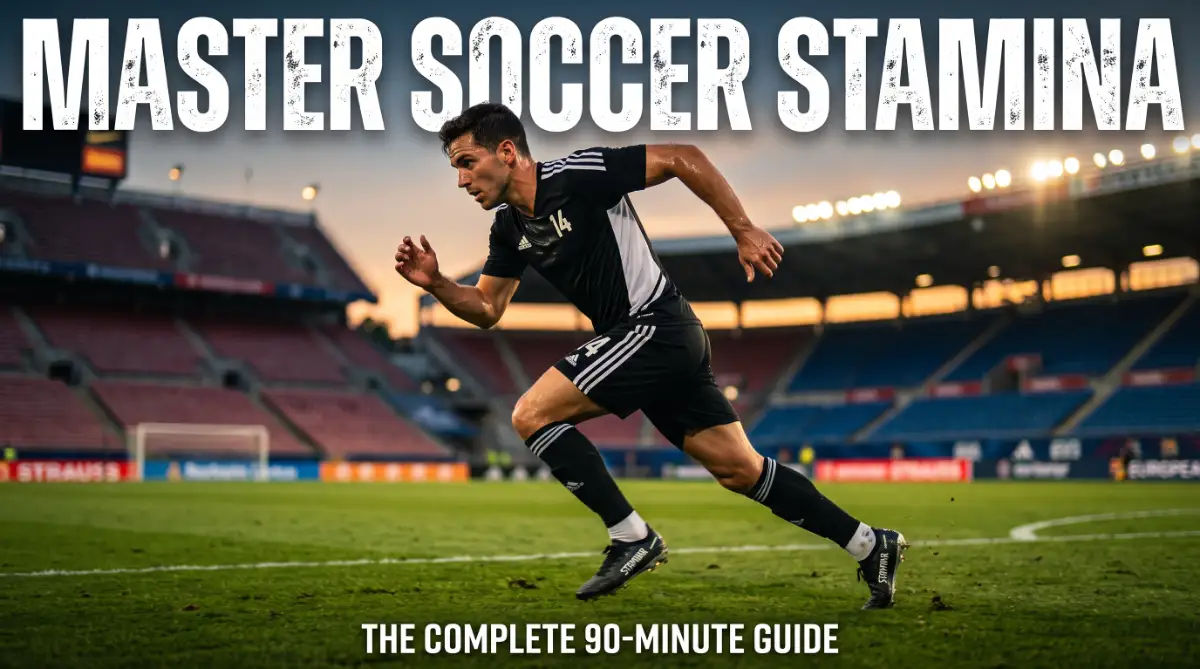
The 70th-Minute Wall: Why Your Legs Give Out When It Matters Most
We have all been there. You are playing the game of your life. The score is tied, and there are only twenty minutes left on the clock. You see a perfect opening to sprint past the defender, but your body says no. Your lungs feel like they are on fire. Your legs feel like heavy lead weights.
This is the moment where many players fail. It is not because they lack skill. It is because their "engine" has run out of fuel. Seeing an opponent sprint past you while you struggle to breathe is heartbreaking. It hurts your pride and makes you feel like you are letting your teammates down.
Many players try to fix this by simply running more. They spend hours jogging at a slow pace around a track. They think that being a "marathon runner" will make them a better soccer player. This is a big mistake. Soccer is not a steady jog; it is a series of explosive sprints, turns, and jumps.
When you follow the wrong advice, you waste your time. You might get better at jogging, but you still feel tired during the match. This leads to a cycle of frustration. You work hard, but you don't see the results on the scoreboard. It feels like you are stuck in mud while the game moves faster than you.
The mental side of this is even tougher. When you are tired, your brain stops working clearly. You make bad passes. You lose your tackle. You stop tracking back to help your defense. This kills your confidence. You start to fear the final minutes of the game instead of embracing them.
You deserve to feel powerful from the first whistle to the last. You want to be the player who is still sprinting when everyone else is walking. Improving your soccer stamina is about working smarter, not just harder. It is about training your body to recover fast so you can go again and again.
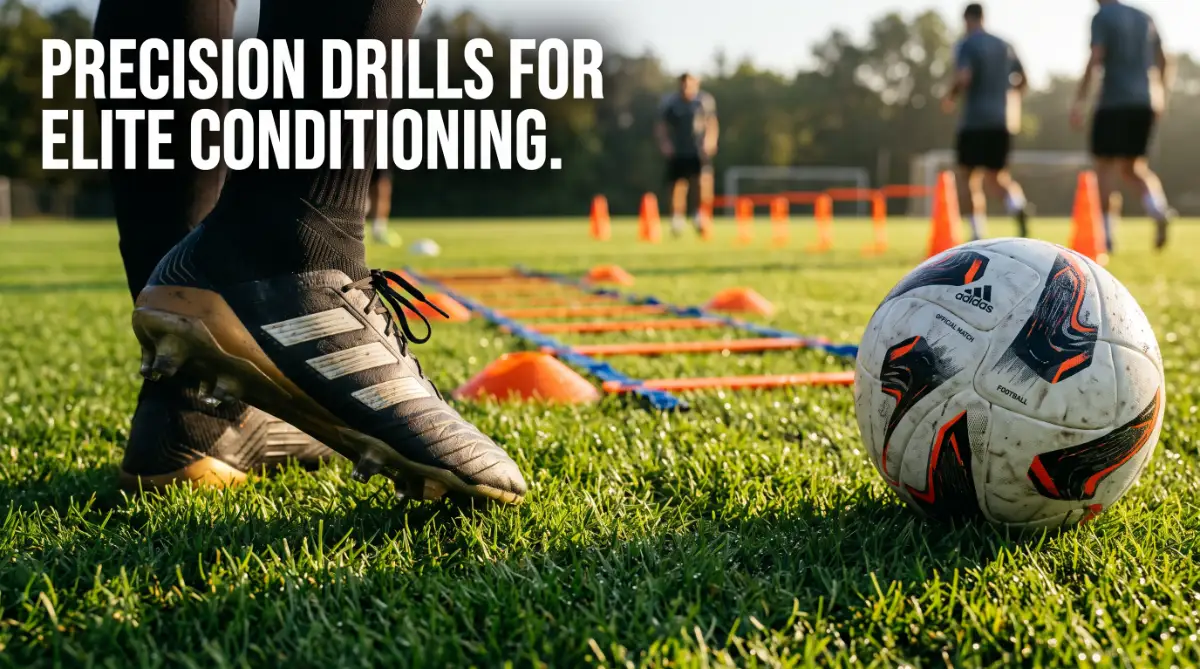
Building a Pro-Level Engine: The Science of Soccer Conditioning
To get better, we need to look at how a soccer game actually works. A pro player covers about 10 to 12 kilometers in 90 minutes. But they aren't just walking.
They are changing direction every few seconds and sprinting hundreds of times. This means you need two types of fitness: aerobic and anaerobic.
Step 1: Mastering High-Intensity Interval Training (HIIT)
The old way of training was long, slow distance running. The new, better way is HIIT. This mimics the actual flow of a soccer match. You go fast, then you go slow, then you go fast again. This teaches your heart to pump blood more efficiently to your tired muscles.
One of the best drills I recommend is the 4x4 Interval Method. You run at a very high intensity—about 90% of your max speed—for four minutes.
Then, you jog slowly for three minutes to recover. You repeat this four times. This is much harder than a normal jog, but it builds incredible endurance.
Think of your body like a car battery. If you only ever drive at 20 miles per hour, your battery never learns to handle high speeds.
HIIT pushes your "battery" to the limit. It forces your lungs to adapt to high pressure. Over time, that 70th minute will start to feel like the 10th minute.

Step 2: The Role of Soccer-Specific Agility Drills
Running in a straight line is easy. But soccer is played in 360 degrees. You are constantly turning your hips, backpedaling, and jumping for headers.
If you only train by running straight, your "soccer muscles" will still get tired quickly. We need to train your body to be efficient during movement changes.
Try using the Shuttle Run or "Beep Test" style drills. Set up two cones 20 meters apart. Sprint to one, touch the line, and sprint back. Do this for 30 seconds, then rest for 30 seconds. This builds what we call "Repeated Sprint Ability" (RSA).
RSA is the secret weapon of elite midfielders. It is the ability to do a 20-meter sprint, recover for five seconds, and then do it again immediately.
When you train this way, your muscles learn to clear away lactic acid faster. That burning feeling in your thighs will start to disappear much sooner than before.
Step 3: Fueling Your Body Like an Athlete
You cannot build a house without bricks. You cannot build stamina without the right food. Many players eat a big meal right before a game and wonder why they feel heavy.
Others don't eat enough and run out of energy by halftime. Both are recipes for failure.
Your muscles run on something called Glycogen. Think of this as the gasoline for your engine. You get glycogen from healthy carbohydrates like sweet potatoes, brown rice, and pasta.
You should eat these "slow-burning" carbs 3 to 4 hours before your match or training.
Hydration is also a huge part of the puzzle. If you are even slightly dehydrated, your blood becomes thicker. This makes your heart work much harder to move blood through your body.
I always tell my players to drink water consistently throughout the day, not just during the game.
Myth vs. Reality: Does Lifting Weights Make You Tired?
A common myth in soccer is that lifting weights makes you "bulky" and slow. This is completely false. Having strong legs actually improves your endurance. Why? Because a stronger muscle doesn't have to work as hard to move your body weight.
If your legs are weak, every step you take requires a lot of effort. If your legs are strong, each step feels lighter. This "movement efficiency" saves energy.
You should focus on exercises like squats, lunges, and plyometrics. These build the power you need to stay light on your feet for the full 90 minutes.
The Importance of Game-Speed Practice
I see many players training at 50% effort. They do their drills, but they do them slowly. If you train slow, you will play slow. You need to push yourself to "game speed" during your practice sessions. This prepares your nervous system for the chaos of a real match.
When you practice your dribbling or passing, do it while you are tired. This is a pro-level tip. Most mistakes happen when a player is fatigued.
By practicing your skills when your heart rate is high, you train your brain to stay calm. You become a player who makes smart choices even when the lungs are burning.
The Recovery Secret: Sleep and Rest
You don't get fit while you are running. You get fit while you are sleeping. When you train hard, you create tiny tears in your muscles. Your body repairs these tears and makes the muscles stronger while you rest. If you don't sleep 8 to 9 hours a night, you are stealing your own progress.
I have seen talented players ruin their careers because they stayed up late playing video games. Their bodies never recovered, and they ended up getting injured. Professional teams spend millions of dollars on recovery tech, but the best tool is still a good night's sleep.
Make sure you also have "active recovery" days. This could be a light walk or some stretching. It keeps the blood flowing without putting stress on your joints. This helps you stay fresh for the big training sessions that really matter.
How to Track Your Progress
You cannot improve what you do not measure. I suggest keeping a simple training log. Write down how many sprints you did or how long your HIIT session lasted. After two weeks, try to add one more sprint or reduce your rest time by five seconds.
Small wins lead to big results. You might not notice a change in one day. But after a month of consistent, soccer-specific training, you will feel like a different person.
You will notice that you are still calling for the ball in the final minutes. You will see your opponents gasping for air while you are ready for the next play.
Remember, stamina is a mental game as much as a physical one. When your body wants to quit, your mind must take over. By training specifically for the 90-minute demands of soccer, you give your mind the confidence it needs.
You know you have done the work. You know your engine is ready. Now, go out there and dominate the pitch.
Moving Smarter: Tactical Efficiency to Save Your Energy
Building a big engine is only half the battle. The other half is knowing when to use it. If you watch a professional midfielder, they rarely sprint for no reason. They move with a purpose.
Many amateur players waste energy by "chasing the game." They run toward the ball every time it moves. This leaves them exhausted by the 60th minute. You need to learn how to conserve your energy for the moments that truly matter.
One pro secret is scanning the field. By looking around every few seconds, you know where the space is. This means you don't have to sprint as far to get open. You can find a better position with a simple five-yard walk instead of a thirty-yard dash.
Another trick is understanding your role. If you are a winger, you don't need to be in every defensive tackle in the middle of the pitch. Trust your teammates to do their job. This allows you to stay fresh for those explosive counter-attacks.
Saving energy isn't about being lazy. It is about being efficient. Think of your stamina like a bank account. Every sprint is a withdrawal.
If you spend all your money in the first half, you will be broke when the game reaches the final, most important minutes.
Staying calm also helps you save physical energy. When you panic, your muscles tense up, and you breathe shallowly. If you can master your mind and stay calm under pressure, your body uses less oxygen. This keeps you feeling lighter for a longer time.
The Mental Edge: Pushing Through the Second Wind
We have all heard about the "second wind." It is that magical moment when your fatigue seems to disappear, and you feel like you can run forever. But this isn't magic; it is biology and psychology working together.
When you feel like you are "dying" on the pitch, it is usually just your brain trying to protect you. Your brain sends signals of pain to make you stop before you actually run out of energy. Pushing through this barrier is what separates winners from losers.
To find your second wind, focus on your breathing rhythm. When we get tired, we tend to take short, gasping breaths. This doesn't give your muscles enough oxygen. Instead, try to take deep, controlled breaths through your nose and out through your mouth.
Positive self-talk is another massive tool. Instead of thinking, "I can't run anymore," tell yourself, "Just one more minute."
Breaking the game into small, five-minute chunks makes the task feel much easier. Your brain is a powerful engine, and it can force your body to keep moving.
Professional athletes often use a technique called visualization. Before the game, they imagine themselves feeling tired but still making a perfect pass.
When the fatigue actually hits during the match, their brain recognizes the situation. It feels familiar and less scary.
By training your mind, you can actually increase your physical limits. You learn to embrace the "burn" in your legs. You realize that the pain is temporary, but the victory of winning a match lasts a long time.
Long-Term Growth: How to Stay Match-Fit All Year
Improving your stamina is not a one-time event. It is a lifestyle that you must maintain. If you train hard for a month and then stop, you will lose your progress in just two weeks. Consistency is the only way to stay at the top.
You should have a weekly training schedule that balances hard work with rest. Never do two high-intensity days in a row. Your body needs time to rebuild the muscle tissue you broke down.
A good plan might include two days of HIIT, one day of strength training, and two days of skills practice.
Don't forget that outdoor sports can be tough on your body in other ways. If you are training in the sun for hours, you must protect your skin from sun damage during outdoor activities. Sunburn causes inflammation, which actually drains your energy and slows down your recovery.
Nutrition must also stay consistent. Avoid the temptation of "cheat meals" right before a big game. Stick to clean proteins and slow-release carbohydrates. Your body is a machine, and high-quality fuel will always give you a high-quality performance.
I also suggest checking your gear. Old, worn-out cleats can cause foot pain and change the way you run. This makes you use more energy than necessary. Investing in good equipment is an investment in your own endurance.
Finally, listen to your body. There is a difference between being "tired" and being "injured." If you feel a sharp, stabbing pain, stop immediately. It is better to miss one training session than to be out for three months with a torn muscle.

Avoid These Pitfalls: The Mistakes That Kill Your Stamina
Even the most dedicated players can fall into traps that ruin their progress. If you want to play for the full 90 minutes, you must be careful. Here are some of the most common mistakes I see on the soccer field.
Mistake 1: The "More is Better" Fallacy
Many players think that if one hour of training is good, then five hours must be better. This leads to overtraining. When you overtrain, your body enters a state of constant fatigue. You stop getting faster, and your stamina actually starts to drop.
Mistake 2: Skipping the Warm-Up
Your heart and lungs need a "heads up" before you start sprinting. If you jump straight into a high-intensity drill, your heart rate spikes too fast. This causes you to hit your limit much sooner. A proper warm-up prepares your blood flow for the work ahead.
Mistake 3: Relying on Energy Drinks
Sugar-filled energy drinks give you a quick boost, but they always lead to a "crash." When your blood sugar drops in the middle of a game, you will feel even more tired than before. Stick to water and electrolyte drinks for steady, long-lasting energy.
Mistake 4: Poor Sleep Habits
Sleep is the most underrated part of fitness. If you don't get enough rest, your body cannot repair itself. You can find 7 easy daily habits to transform your sleep quality forever to ensure you are waking up fresh and ready to play. Without sleep, your stamina will always be limited.
Mistake 5: Training Like a Runner, Not a Player
Jogging five miles every day will make you a good jogger. It will not make you a good soccer player. Soccer requires explosive power. If you don't include sprints and changes of direction in your training, you will be too slow for the actual match.

Taking Action: Your Path to 90-Minute Dominance
You now have all the tools you need to become the fittest player on your team. We have covered everything from HIIT drills and tactical movement to the importance of recovery and mental toughness. But knowledge is useless without action.
The next time you step onto the training pitch, don't just go through the motions. Push yourself. When your legs feel heavy, remember that this is where the real growth happens.
Every extra sprint you do now is an extra minute of energy you will have on match day. Start small. Maybe this week you only add one HIIT session. That is okay.
The goal is to build a habit that lasts for years. Over time, you will notice that the game seems to slow down around you. You will have the energy to think clearly while everyone else is struggling to breathe.
You have the potential to be a game-changer. You can be the player who scores the winning goal in the final minute because you were the only one with the strength left to sprint. It takes hard work, but the feeling of being truly fit is worth every drop of sweat.
Don't wait for the "perfect" time to start. There is no perfect time. Put on your cleats, grab a ball, and head to the field. Your journey to 90-minute dominance starts with the very first step you take today.
A Word from the Expert:
Soccer is a beautiful game, but it is also a demanding one. Treat your body with respect. Feed it well, let it rest, and push it to its limits during training. If you follow this guide, you won't just improve your stamina; you will transform the way you play the game forever. See you on the pitch!
Disclaimer: The information provided in this article is for educational and informational purposes only. Always consult with a healthcare professional or a certified fitness coach before starting any new, intense physical training program, especially if you have underlying health conditions.