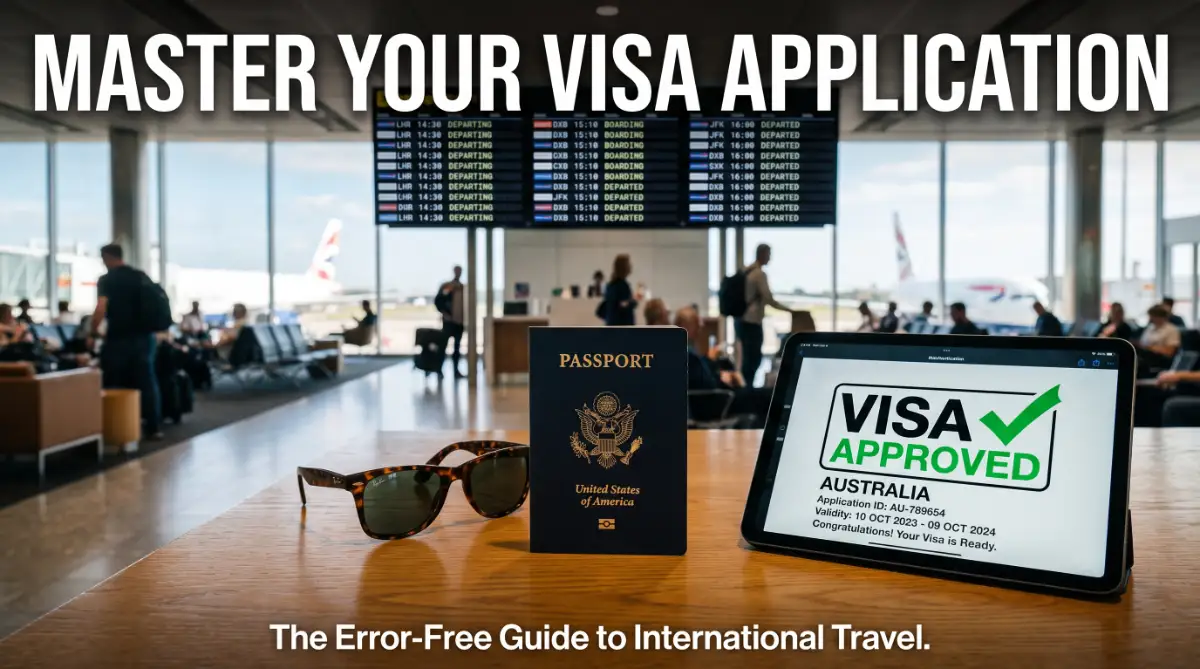
The Heartbreak of a Denied Travel Dream
Imagine spending weeks planning your dream vacation. You have picked the perfect hotels. You have looked at pictures of the Eiffel Tower or the beaches of Bali every single night. You saved your hard-earned money for months.
Then, you submit your visa application. You wait with a racing heart. Finally, the email arrives, or you get your passport back. You open it only to see that dreaded "Visa Refused" stamp.
This moment is more than just a rejection. It feels like a punch to the gut. You lose your application fees. Often, you lose money on non-refundable flights or hotel bookings. The excitement you felt turns into deep frustration and embarrassment.
You start to wonder what you did wrong. The reality is that thousands of travelers face this same nightmare every single day. Applying for a visa feels like walking through a minefield where one tiny mistake can blow up your entire plan.
Why Travelers Keep Falling into the Same Traps
Many people believe that getting a visa is just about filling out a form. They think if they have the money, the visa is guaranteed. This is a huge mistake. Here are the reasons why many people fail:
- Over-reliance on "Internet Wisdom": People often follow random advice from social media groups. Every person's situation is unique. What worked for a student might not work for a business owner.
- Incomplete Paperwork: A single missing signature or an old bank statement can trigger an instant rejection.
- Vague Travel Plans: Embassies hate uncertainty. If you cannot explain where you are staying or what you are doing, they will doubt your intentions.
- Mismatching Information: If your form says one thing and your documents say another, it raises a red flag for fraud.
- Ignoring Local Embassy Rules: Every embassy has its own small, specific rules. Ignoring these "minor" details leads to major failures.
The Mental Toll of Visa Rejection
A visa rejection does more than just ruin a trip. It stays with you.
- Loss of Confidence: You begin to feel like you are not "good enough" to travel. This can stop you from trying again.
- Future Complications: Once you have a rejection on your record, you must declare it in every future application. It makes the next process even harder.
- Stress and Anxiety: The months leading up to a re-application are often filled with worry. You second-guess every document and every word.
- Financial Guilt: Seeing your savings disappear because of a simple clerical error is a heavy burden to carry.
We understand these fears. We know that you are not just a number on a form. You are a person with a dream to see the world. That is why we have created this guide.
We want to remove the mystery from the process. We want to show you exactly how to present your case so the visa officer sees a genuine, responsible traveler.
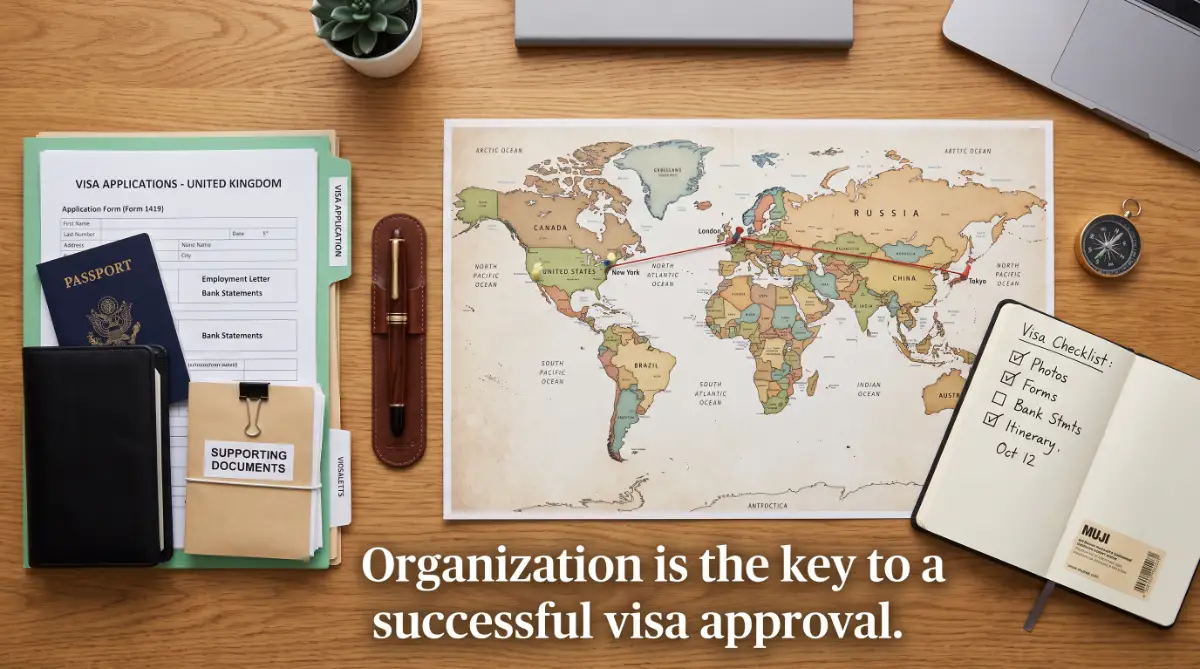
Building Your Bulletproof Visa Strategy
To win at the visa game, you need to think like a visa officer. They are not looking for reasons to let you in. They are looking for reasons to keep you out. Their main job is to make sure you will come back home.
If you can prove that you have a good life to return to, your chances of success skyrocket. Let's look at the first few steps to ensure your application is perfect.
Step 1: Master the Jurisdiction and Specific Requirements
The biggest mistake starts before you even download the form. You must know exactly where to apply. Some countries use third-party agencies like VFS Global or BLS. Others require you to visit the embassy directly.
Research the "Last Updated" Checklist:
Embassies change their requirements often. Do not use a checklist you found on a blog from three years ago. Always go to the official embassy website. Look for the specific list for "Tourist Visas."
Check the Validity Rules:
Your passport must be valid for at least six months beyond your stay. But did you know some countries require two or three blank pages?
If you only have one, you might get rejected before the process even starts. Check your passport today. If it is old or damaged, replace it first.
Step 2: Create a Transparent Financial Story
The visa officer wants to know how you will pay for your trip. They also want to see that you didn't just borrow money to show a high balance. This is where most people fail.
The "Clean Statement" Rule:
Your bank statement should show a steady history. If you suddenly deposit a large amount of cash right before applying, it looks suspicious. This is called "funds padding." If you do receive a large sum, like a bonus or a gift, you must provide a letter explaining where it came from.
Show Your Ties to Home:
Money is not just about the trip cost. It is about your lifestyle. Show that you have a job, a business, or property. A steady salary deposit every month is the best evidence of a stable life. It proves you have a reason to return to your job.
Step 3: Perfect the Application Form Without Errors
The application form is your primary "interview." If it is messy or has errors, the officer will think you are not serious.
Be Consistent with Your Passport:
Write your name exactly as it appears in the machine-readable zone of your passport. If your passport has a middle name, include it. If your date of birth is in a specific format (DD/MM/YYYY), follow it strictly.
The Power of "N/A":
Never leave a field blank. If a question does not apply to you, write "N/A" (Not Applicable). A blank space looks like you forgot to answer. It makes the form look incomplete.
Matching Your Itinerary:
The dates on your form must match your flight reservations and your hotel bookings perfectly. If your form says you are staying for 10 days, but your flight shows a 12-day trip, you have a problem. Double-check every single date before you hit submit.
Myth vs. Reality: The Visa Interview
Many people think the visa interview is a "test" they need to pass.
- Myth: You need to dress in a tuxedo or a formal gown to impress the officer.
- Reality: You just need to look neat and professional. Business casual is usually best.
- Myth: If you give a long, detailed answer, you are more likely to get the visa.
- Reality: Visa officers are busy. They want short, honest, and direct answers. If they ask "Why are you going?", don't tell a 5-minute story about your childhood. Just say, "I want to visit the museums and historical sites in Rome."
Expert Tip: The Importance of the Cover Letter
While not always mandatory, a cover letter is your secret weapon. It is a one-page document where you speak directly to the officer.
Use the cover letter to:
- Explain the purpose of your trip.
- Summarize your financial situation.
- Explain any "weak points" in your application (like a gap in employment).
- List the documents you have attached.
Keep it professional and polite. Do not beg for the visa. Instead, state the facts clearly. This shows that you are an organized and serious traveler.
Understanding the Role of Flight and Hotel Proof
Many embassies ask for "flight reservations." This does not always mean you have to buy the ticket. In fact, many embassies advise against buying a ticket until the visa is approved.
Use Verifiable Bookings:
Use services that allow you to hold a flight or book a hotel with "free cancellation." However, make sure these bookings are real. Some people use "fake" or "dummy" tickets.
If the visa officer checks the PNR (Passenger Name Record) and finds it is invalid, your visa will be rejected for fraud. Always use legitimate booking sites that provide a real confirmation code.
The Scientific Approach to Photos
It sounds silly, but many visas are rejected because of the photo. Each country has strict rules about size, background color, and facial expressions.
- No Glasses: Even if you wear them every day, take them off for the photo. Reflections can hide your eyes.
- The 80% Face Rule: Most European visas require your face to take up 70% to 80% of the photo.
- Recent Means Recent: Do not use a photo from three years ago. If you look different now, the officer might doubt your identity. Spend a few dollars to get a fresh, professional photo taken at a studio that knows visa rules.
By following these initial steps, you are already ahead of 90% of other applicants. You are showing the embassy that you are careful, honest, and well-prepared.
In the next part of our guide, we will look at how to handle more complex situations and the final submission process.
Remember, a visa is not a right; it is a privilege. Treat the process with respect, and the world will open its doors to you.
Strengthening Your Case with Solid Proof of Return
Once you have your basic documents, you need to go deeper. Most visa rejections happen because the officer is not sure you will come back. They worry you might stay and work illegally. To beat this, you must show "strong ties" to your home country.
Think of this as proving that your life at home is too good to leave behind. If you have a stable job, you need more than just a payslip. Get a No Objection Certificate (NOC) from your employer. This letter should be on official company letterhead.
It should state your position and how long you have worked there. Most importantly, it should mention the specific dates you are allowed to be away.
It should also say that your job will be waiting for you when you return. This simple paper tells the officer that you have a professional responsibility to come home.
If you are a business owner, show your trade license and tax returns. Do not just show the papers; explain what your business does.
Use a cover letter to talk about your employees or your future business plans. The goal is to show that your business cannot run without you for a long time.
For students, a letter from the dean or principal is needed. It should prove you are currently enrolled and have classes to attend after your trip. If you have family back home, like a spouse or children, mention them.
You can even include a copy of your marriage certificate or children's birth certificates. These are emotional and legal ties that prove you are a genuine traveler.
The Secret of the Day-by-Day Travel Plan
A vague travel plan is a major red flag. If you just say "I am going to Paris for sightseeing," it is not enough. You need a detailed, day-by-day itinerary. This shows the officer that you have actually researched your trip.
Start with Day 1 and list your arrival flight. Mention the name of your hotel. For Day 2, list a specific activity, like visiting a famous museum or a park. Continue this for every day of your stay.
You do not need to buy tickets for everything yet. Just showing that you know where you are going is a huge help. Include the names of the cities you will visit and how you will travel between them. If you are taking a train from one city to another, mention that.
This level of detail makes your story believable. It shows you are a tourist, not someone looking for a job. When you plan this, make sure it matches your budget. If you show a very expensive plan but your bank balance is low, the officer will be confused.
They might think you are lying about your funds. Keeping things realistic is the best way to build trust. If you are feeling stressed about organizing these details, remember to master your mind and stay calm. The process takes time, but being organized will save you from a lot of heartaches later.
Handling the Financial "Hidden Requirements"
We talked about bank statements before, but there is more to the story. Some countries look for specific types of accounts. They prefer savings or current accounts where money moves in and out regularly.
If you have a fixed deposit, you can include it as extra proof. However, do not use it as your main source of travel funds. The embassy wants to see "liquid" cash that you can spend easily. Also, look into getting a Travel Insurance policy.
Many people skip this, but it is often mandatory for Schengen and other visas. It is not just a rule; it is a safety net. If you get sick or have an accident, the insurance covers the cost.
Without it, the embassy might think you will become a burden on their healthcare system. Always get a policy that covers at least 30,000 Euros or the equivalent. Ensure it covers the entire duration of your trip.
Before you buy any travel-related financial product, you should protect your money from fake loan and insurance offers by checking the provider's reputation. Stick to well-known companies that the embassy recognizes.
Having an emergency fund is also a great point to mention in your cover letter. It shows you are financially responsible and can handle unexpected costs without getting into trouble abroad.

Mistakes That Can Break Your Visa Application
Even with the best plan, small errors can lead to a "No." Let's look at the most common traps that travelers fall into. Understanding these will help you stay on the right path.
The "Borrowed Money" Trap
This is perhaps the most common reason for rejection. Many people borrow a large sum from a friend to show a high bank balance. They think a big number will impress the officer.
In reality, visa officers are experts at spotting this. They look at the "transaction history," not just the final balance. If they see a huge deposit that does not match your salary, they will ask for the source.
If you cannot explain it, they will think you are trying to trick them. It is much better to show a smaller, honest balance that you saved yourself.
Being Inconsistent Across Documents
Your application is like a puzzle. Every piece must fit together perfectly. If your hotel booking says you are in the city for five days, but your cover letter says seven days, it creates doubt.
Check your dates, names, and passport numbers multiple times. Even a small typing error in your passport number can lead to an automatic rejection.
Before you submit, read every document side-by-side. Make sure the story they tell is the same.
Providing Fake Documents
Never, under any circumstances, use fake papers. Some "travel agents" might offer to create fake bank statements or job letters for a fee. This is a huge risk.
Embassies have specialized teams that verify documents. They call banks and companies. If they catch you with a fake paper, you might get a permanent ban.
This means you can never visit that country or any other country in the same region. It is never worth the risk. Always be honest, even if your situation is not perfect.
Ignoring the "Health and Character" Rules
Some countries require a medical check-up or a police clearance certificate. If the checklist asks for it, do not ignore it. These documents prove that you are not a threat to the public.
If you have a minor criminal record from many years ago, it is often better to be honest about it. Lying about your background is much worse than having a small mistake in your past.
Many countries only care about serious crimes, but they care a lot about honesty.
Relying Too Much on a Sponsor
If someone else is paying for your trip, you still need to show your own ties. Some people think that if a rich relative sponsors them, they don't need to show their own job or assets.
The embassy still wants to know why you will come back. A sponsor proves the money is there, but they don't prove you will return home.
You must still provide your own employment or student papers. This shows that you have a life to return to, regardless of who pays for the ticket.
Smart Strategies for Long-term Travel Success
Getting one visa is great, but becoming a "trusted traveler" is even better. When you get your first visa, follow all the rules. Do not stay even one day past your allowed time.
When you return home, you have successfully completed a "travel cycle." This stays on your record. The next time you apply, the officer will see that you followed the rules before. This makes the second application much easier.
To keep your finances in check for future trips, try to create a realistic monthly budget. Saving a little bit every month is better than rushing to find funds at the last minute. This way, your bank statement always looks healthy and natural.
Your Path to a Stamp-Filled Passport
The world is a beautiful place, and you deserve to see it. While the visa process can feel like a giant wall, it is really just a series of small steps. If you take your time and follow the rules, you will get there.
Be honest, be organized, and be patient. Do not let the fear of rejection stop you from trying. Thousands of people just like you get their visas approved every single day. They are not luckier than you; they are just better prepared.
Start collecting your documents today. Check your passport, talk to your employer, and start planning that dream itinerary.
Before you know it, you will be standing at the airport with a fresh stamp in your passport and a heart full of excitement.
The memories you will make are worth every bit of the effort you put into the application. You have the tools, the knowledge, and the plan. Now, go out there and make your travel dreams a reality. Safe travels!
Disclaimer: The information provided in this article is for educational purposes only. Visa rules and embassy requirements change frequently. Always consult the official website of the embassy or a legal travel expert before submitting your application. We are not responsible for any visa rejections or financial losses resulting from the use of this guide.
